
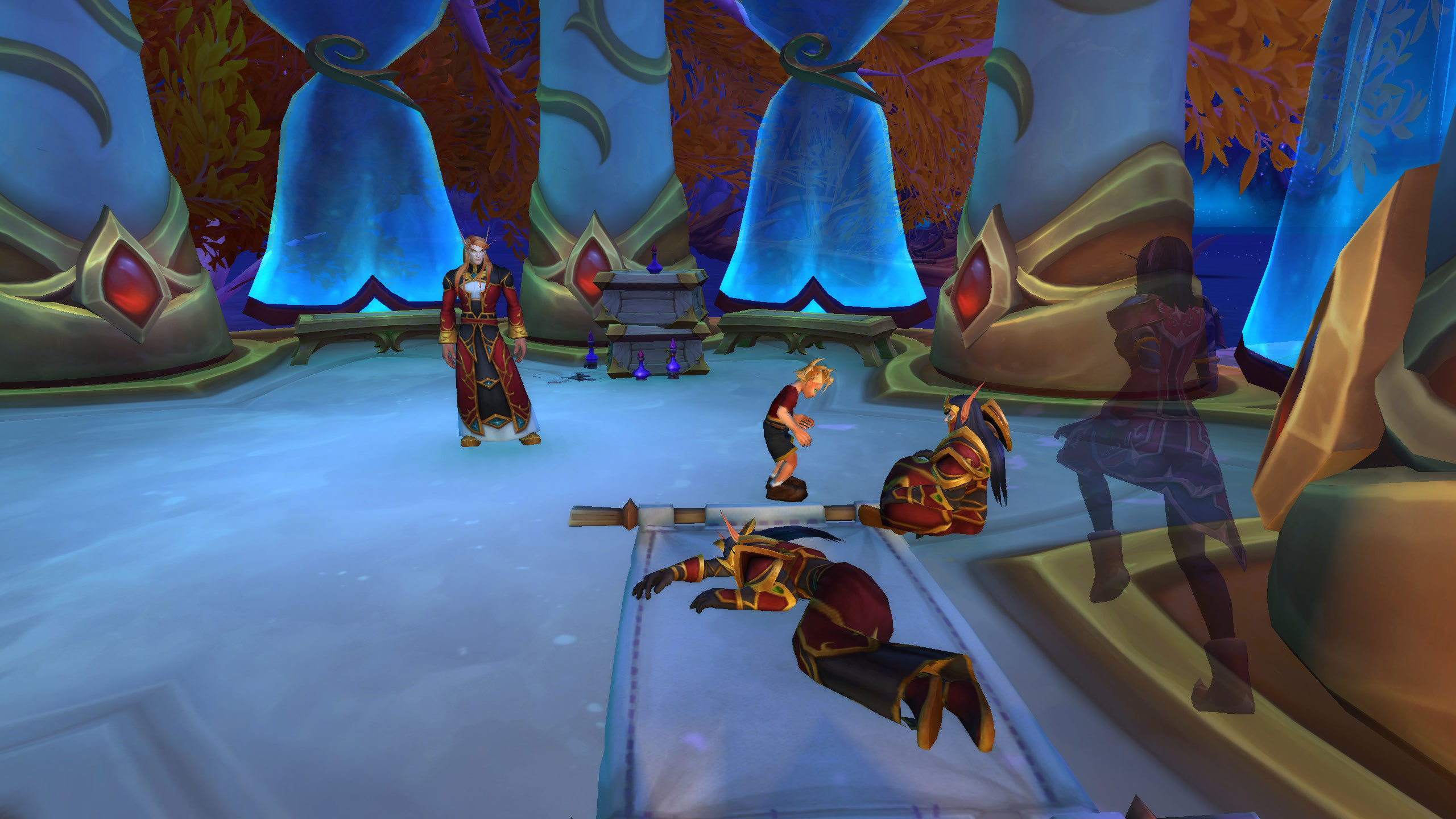
In the common analysis of endgame performance, “Damage” and “Survival” are treated as two separate metrics. This is a Tactical Fallacy. In World of Warcraft, both are governed by a single, hidden skill: Spatial Efficiency. A player who moves poorly is constantly interrupting their own rotation, leading to a massive loss of potential output. Conversely, a master of movement uses the geometry of the encounter to maintain 100% uptime while remaining entirely safe. This guide explores movement not as an escape from danger, but as a Force Multiplier that determines your true value to a group.
The Caster’s Paradox: Moving to Gain Time
For ranged classes, movement is often viewed as the enemy of damage. This is the Static Anchor Trap. Players stand still until the fire is beneath them, then panic and run a long distance, losing five seconds of casting. Movement Mastery utilizes Micro-Relocation.
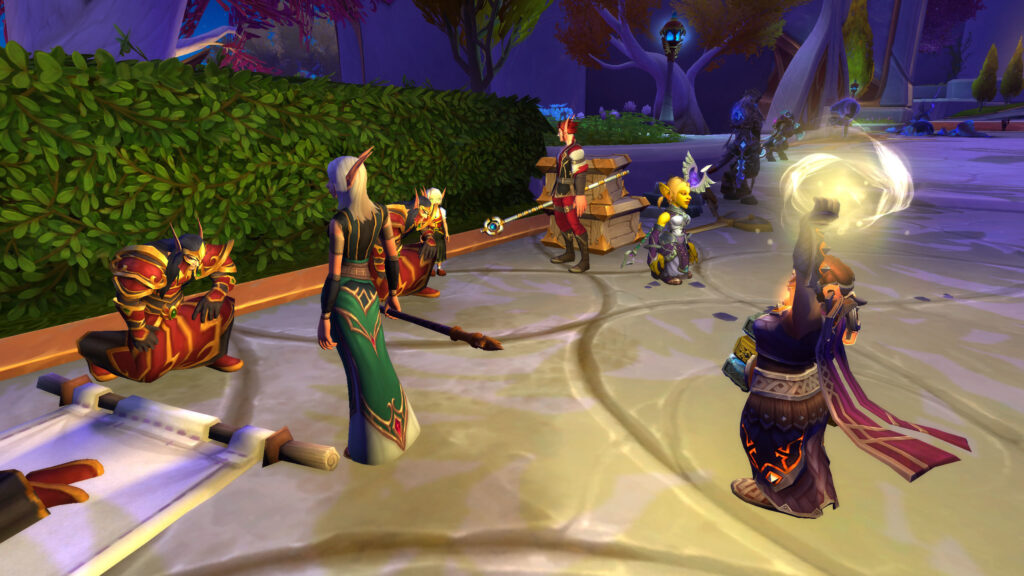
By moving exactly two yards between global cooldowns—a technique known as “Stutter-Stepping”—you can navigate an entire room without ever missing a spell. You are “buying” safety with the time usually wasted on indecision. In the math of the encounter, the person who moves early and briefly always out-damages the person who moves late and far.
The Movement Mastery Protocol
To transition from a reactive “Dodger” to a predictive “Master,” implement these four pillars of Kinetic Awareness:
- The “A-D” Strafe Rule: Never use the “Turn” keys. Rebind A and D to “Strafe.” This allows you to move sideways while keeping your face (and your spells) pointed at the boss. It is Combat Facing Sovereignty.
- Predictive Pathing: Watch the boss’s model, not just the floor. If the dragon’s head turns, the fire is coming. Move *before* the visual effect appears. This Temporal Anticipation removes the “Panic” from the mechanic.
- The “Hitbox” Anchor: Learn the exact edge of your character’s circle. You don’t need to run to the other side of the room; you only need to be one inch outside the “Swirl.” Minimalist Relocation preserves your rotational momentum.
- Instant-Cast Threading: Every class has an ability that can be used while moving. Map these to your most accessible keys. Use the “Movement Window” to refresh DoTs or use procs, turning “Dead Time” into Productive Transit.
The Geometry of the “Safe Spot”
Most raid encounters have “Dead Zones”—areas of the floor that are mathematically less likely to be targeted by mechanics. Movement Mastery involves identifying these High-Probability Anchors early in the fight.
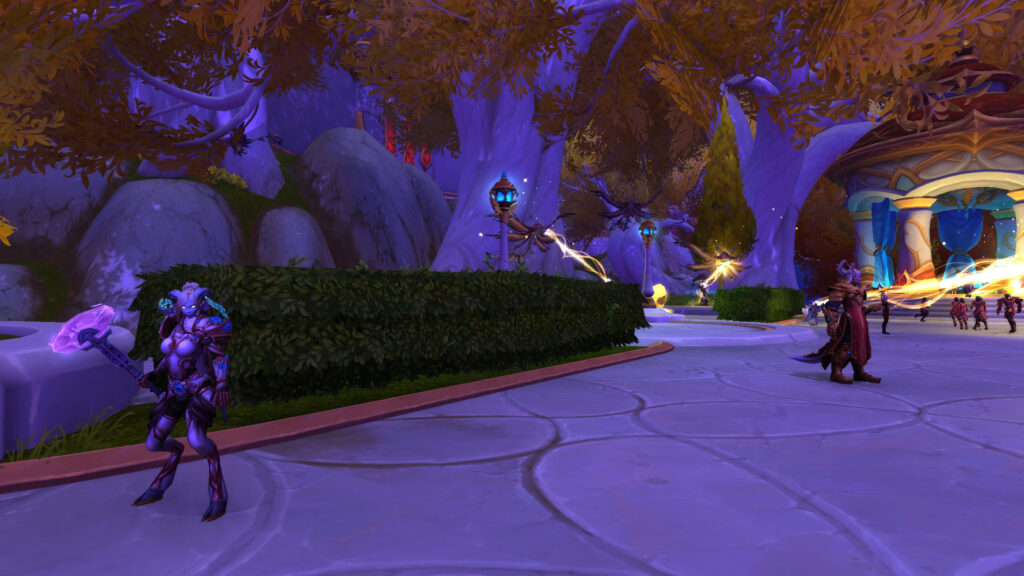
By standing in these zones, you reduce the frequency of required movement by 70%. You aren’t just “good at dodging”; you have engineered a scenario where you don’t have to dodge. This is Strategic Positioning, and it is the primary reason elite players seem to “do more” while doing less.
Defensive Movement: The Line-of-Sight Shield
In the open world or PvP, movement is your strongest defensive cooldown. Using a tree, a rock, or a pillar to break “Line-of-Sight” (LoS) provides 100% damage reduction against casters for zero mana. This is Environmental Denial. Beginners try to out-heal damage; masters move so the damage never reaches them. By mastering the 3D space of Azeroth, you become an elusive target that frustrates the enemy’s AI and the opponent’s patience alike.
The Cognitive Load of the “Click-to-Move” Trap
True mastery requires the eradication of “Mouse-Movement” for anything other than camera control. If you are clicking the ground to move, you are using your Visual Attention for a task that should be handled by your fingers.
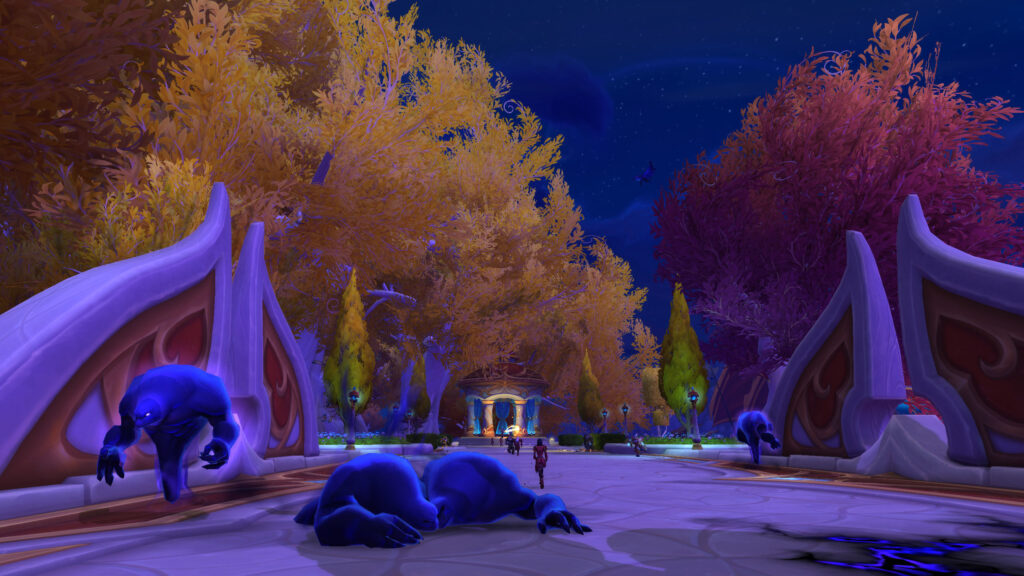
This creates Attentional Blindness. By using the keyboard to move (WASD/Strafe) and the mouse to look, you decouple your movement from your targeting. You gain the ability to look at the raid frames while running in the opposite direction. This “Decoupling” is the final evolution of a pro player.
Conclusion: The Fluid Champion
Movement is not a distraction from the game; it is the game. By mastering stutter-stepping, predictive positioning, and strafe-facing, you transform your character from a clunky avatar into a fluid extension of your will. You stop dying to “bad luck” and start surviving through “good logic.” Your damage goes up because your downtime goes down. In the end, the master of movement is the person who is always in the right place at the right time—the definition of a legend.